Dynamic Odds Adjustments and Fluid Payout Systems Shaping In-Play Strategies in Soccer, Horse Racing, and Virtual Gaming Environments
Sage Carter · Aug 7, 2026
Dynamic Odds Adjustments and Fluid Payout Systems Shaping In-Play Strategies in Soccer, Horse Racing, and Virtual Gaming Environments
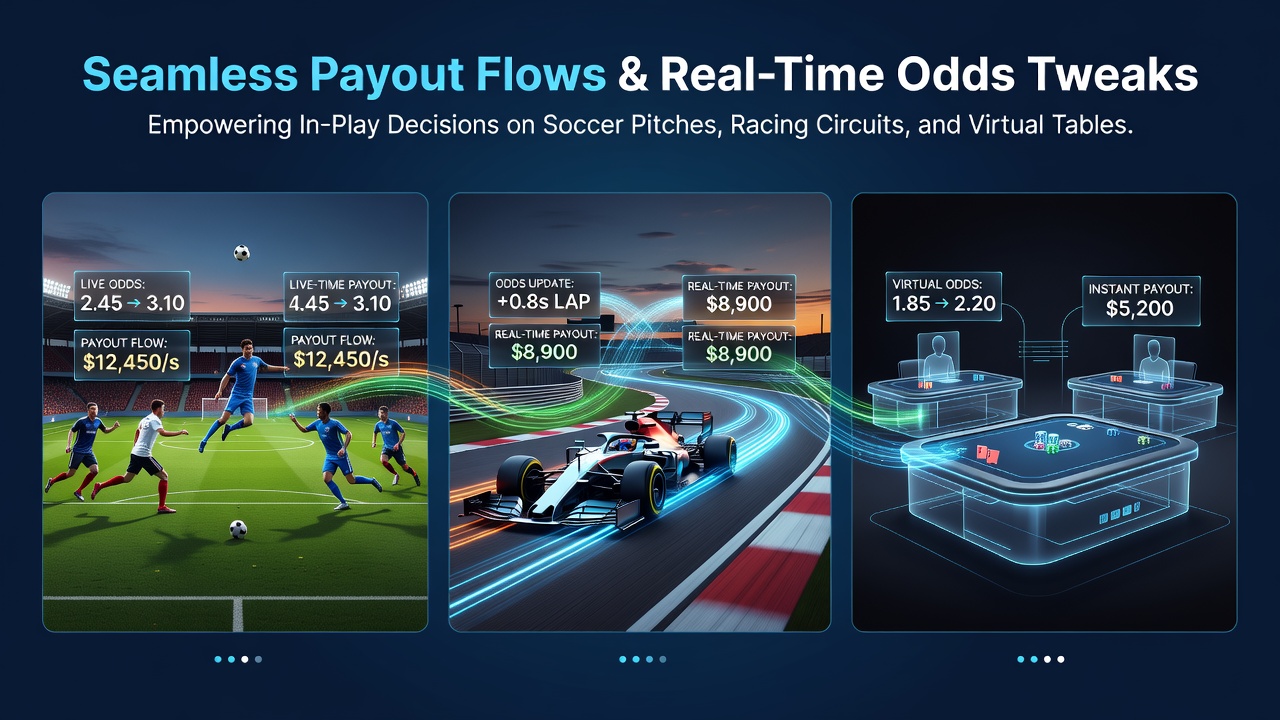
Seamless payout mechanisms combined with real-time odds modifications now allow bettors to adjust positions during live events on soccer pitches, racing circuits, and virtual tables, and these tools integrate directly with mobile platforms that process transactions in seconds rather than minutes. Data from industry reports shows transaction completion times dropping below five seconds in multiple jurisdictions during 2025, which creates opportunities for rapid reinvestment when odds shift mid-match or mid-race.
Technology Driving Live Adjustments
Operators deploy algorithms that recalculate odds based on ball possession percentages, player substitutions, and track conditions, and these updates reach user interfaces within two to three seconds according to testing conducted by European gaming associations. Bettors receive notifications on mobile devices that prompt immediate decisions, while automated payout systems credit winnings without requiring separate withdrawal requests in many cases. Observers note that this combination reduces downtime between wagers and supports continuous engagement across different event types.
Virtual tables present another layer where random number generators feed into live odds displays, and seamless settlement occurs the moment a round concludes. Research from Canadian regulatory bodies indicates that platforms using instant payout protocols see higher session continuation rates because funds return to player accounts without manual intervention.
Applications Across Event Types
On soccer pitches, in-play markets adjust after goals, red cards, or corner counts, and integrated payment flows let participants move winnings into new selections without exiting the app interface. Racing circuits rely on similar systems where finish-line results trigger automatic calculations, and bettors can redirect funds toward subsequent races while odds on upcoming events remain fluid. Virtual tables mirror this pattern through continuous game cycles where each outcome updates probabilities for the next round almost instantly.

Regulatory Context in Mid-2026
By August 2026 several jurisdictions outside the United Kingdom had introduced updated standards for transaction speed and odds transparency, and these rules require operators to maintain audit trails for every adjustment made during live play. Figures from the Nevada Gaming Control Board reveal that licensed platforms processing over 10 million in-play transactions monthly achieved settlement accuracy rates above 99.8 percent when using real-time systems. Industry organizations in Australia reported similar performance metrics after mandating minimum payout speeds for digital betting environments.
Payment providers now partner directly with betting platforms to embed instant transfer capabilities, and this integration supports cross-border users who encounter varying currency requirements. Academic studies from Australian universities have examined how reduced friction in fund movement influences decision timing during high-volatility periods such as penalty shootouts or final laps on the track.
Operational Benefits for Platforms
Operators that maintain both fluid odds engines and instant payout rails report lower support ticket volumes because fewer users contact staff about delayed credits. Trade groups representing gaming technology suppliers note that API connections between odds providers and banking partners allow simultaneous updates across multiple markets without latency spikes. These efficiencies become particularly relevant during peak periods when thousands of users interact with the same live event.
Virtual table environments benefit from similar architecture because each game round generates discrete outcomes that trigger both odds recalculations and payout instructions in one automated sequence. Data compiled by research institutions shows that platforms adopting unified systems experience fewer reconciliation errors compared with those relying on separate legacy modules for payments and odds management.
Conclusion
Seamless payout flows paired with real-time odds modifications continue to reshape how participants engage with live markets on soccer pitches, racing circuits, and virtual tables. Regulatory developments through 2026 have reinforced requirements for speed and accuracy, while technical integrations between payment processors and odds engines support uninterrupted decision cycles. These capabilities rest on measurable performance data from multiple regions and remain subject to ongoing oversight by relevant authorities.