Stable Patterns Define Britain's Gambling Habits in Commission's Latest Three-Year Survey
Sage Carter · Aug 2, 2026

Stable Patterns Define Britain's Gambling Habits in Commission's Latest Three-Year Survey
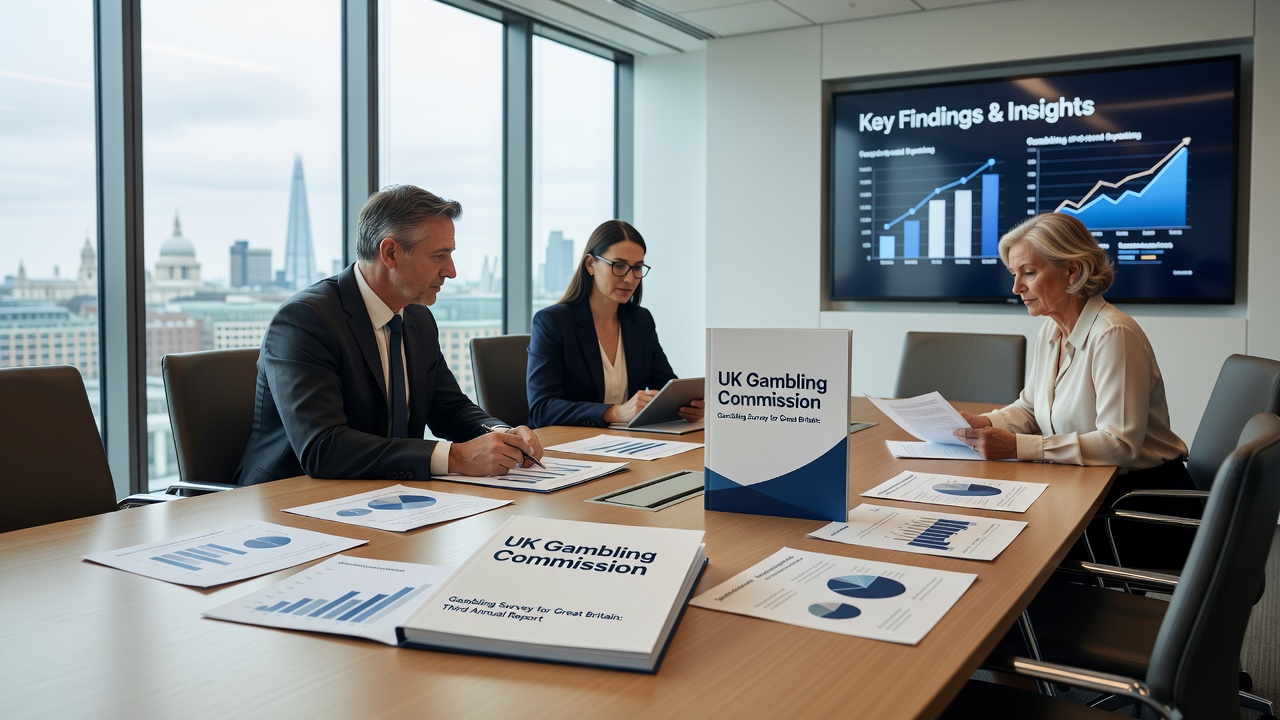
The UK Gambling Commission has published its third annual report from the Gambling Survey for Great Britain, delivering consistent statistics across 2023 through 2025 on how adults engage with gambling, what drives their choices, and how they experience the outcomes. This release marks three full years of uniform data collection that allows direct year-over-year comparisons without changes in methodology. Participation levels have held steady, with 47 percent of adults reporting some form of gambling activity in the past four weeks. When lottery-only play is removed from the calculation the figure drops to 27 percent, a split that observers note remains unchanged across the three-year window. The survey captures behaviour across Great Britain and focuses on official statistics rather than estimates from other sources.Reasons Adults Give for Gambling Activity
Participants who gambled listed several motivations for their involvement, and the percentages show clear priorities. The chance to win big money topped the list at 84 percent, followed by fun at 69 percent, making money at 57 percent, and excitement at 53 percent. These figures come directly from the responses collected in the most recent wave and align closely with earlier years in the series.
The report presents these reasons as self-reported drivers without assigning weight to any single factor. Researchers compiled the data through structured questioning that allowed multiple selections, producing the ranked percentages now available in the official release.Problem Gambling Rates Hold Steady
Problem gambling measured by a PGSI score of 8 or higher stayed at 2.4 percent in 2025, matching the level recorded in previous years of the survey. The stability extends across the full three-year period, giving regulators and analysts a consistent benchmark for this particular threshold. The survey also tracks lower-level risk categories, yet the headline problem-gambling figure receives the most attention in the current report.
 Those who have examined the data note that the unchanged rate appears across both online and land-based activities, though the report stops short of attributing causes. The three-year consistency allows future comparisons once additional waves are added.
Attitudes and Reported Feelings Among Gamblers
Most people who gambled described their activity in positive or neutral terms. The survey asked respondents to rate their overall feelings, and the combined positive and neutral responses formed the majority. This pattern has remained consistent since the survey series began, providing another stable indicator alongside participation and problem-gambling figures.
The report includes breakdowns by age, gender, and activity type, yet the overarching message centers on continuity rather than sharp shifts. Data collection methods stayed uniform, which supports the reliability of these comparisons.Accessing the Full Dataset
Readers who want the complete tables and methodology details can find them in the Gambling Survey for Great Britain (Annual Report 2025) available through the Commission's site. The document supplies the raw percentages, confidence intervals, and sample sizes that underpin the headline numbers released in the news announcement.
The three-year span covered by the report gives policymakers a clearer picture of trends than single-year snapshots could provide. Because the methodology has not changed, differences or the lack of differences between 2023, 2024, and 2025 can be read with greater confidence.Conclusion
The third annual GSGB report confirms that headline participation, motivations, problem-gambling prevalence, and self-reported feelings have all remained within a narrow range over the three years examined. The data release supplies the consistent statistics needed for ongoing monitoring and offers a factual baseline for any future analysis of gambling behaviour in Great Britain.